

The safest ways to buy Bitcoin in 2026 for beginners are trusted crypto exchanges, beginner-friendly wallet apps, and well-known payment apps because you can start with small amounts, use familiar payment methods, and protect your account with basic security tools like two-factor authentication.
Well, buying Bitcoin safely is not just about clicking the “Buy” button. You also need to pick a platform with a good reputation, understand the fees, use a secure payment method, and store your Bitcoin in a safer place after you buy it. Honestly, beginners usually lose money from simple mistakes, like using the wrong app, rushing into a trade, or ignoring account security, not from the Bitcoin purchase itself.
In this guide, you will learn the safest places to buy Bitcoin, the easiest ways to get started, and the step-by-step process to buy, sell, and invest in Bitcoin as a beginner in 2026. You will also see how to buy with a credit or debit card, how cash buying works, what the cheapest options can look like, and how to choose a method that fits your comfort level.
Table of Contents
How to Buy Bitcoin: So, What is Bitcoin First?
You can think of Bitcoin as digital money that you can buy, hold, and send online without a bank running the system.
Bitcoin is not a company share, so you are not buying ownership in a business. Bitcoin is a digital asset that runs on a public network called a blockchain. A blockchain is basically a shared record of transactions, and it helps the network track transfers without one company controlling everything.
Look, you will usually see Bitcoin written as BTC on exchanges and apps. A helpful thing for beginners is that you do not need to buy one full Bitcoin. One Bitcoin can be divided into very small units, so your first purchase can be $10, $20, or any small amount that fits your budget.
Price swings are a normal part of Bitcoin, and that matters before you invest. Some days move up fast, and other days drop hard, so a small first buy usually feels safer while you learn. Another basic point is the difference between an exchange and a wallet. An exchange is where you buy or sell Bitcoin. A wallet is where you store it for better control after buying.
So, your goal here is simple: understand what Bitcoin is, start small, and use a safe platform.
MEXC: Zero-Fee App to Buy Bitcoin (BTC)
MEXC (Zero Fees & No KYC Trading)

- Top Features: Derivatives Trading, Spot, Launchpad, Earn, Demo Trading
- Supported Coins: 2200+ tradable assets including BTC and ETH
- Trading Fees: 0% (No fees)
- Deposit methods: Global bank transfer, Simplex, Banxa, and more
Safest Places to Buy Bitcoin for Beginners: Bitcoin Buy Guide
The safest place to buy Bitcoin depends on your comfort level, payment method, and how much control you want. Most beginners do best with trusted crypto exchanges because prices are usually better and buying is simpler. Bitcoin ATMs, P2P platforms, and payment apps can work too, but each option has trade-offs.
Safety starts with platform reputation, two-factor authentication, and clear fees before your first deposit. Below, you will see beginner-friendly places to buy Bitcoin and how each one fits your needs.
(A) Crypto Exchanges (List of Best to Buy Bitcoin)
Crypto exchanges are usually your best starting point because you get better pricing, strong liquidity, and simple buy tools. Here are solid exchange picks for different needs to buy Bitcoin:
| Exchange | Best fit for | KYC | Platform Availability | Total Reach | Supported Coins | Fees |
|---|---|---|---|---|---|---|
| MEXC | Lowest fees | Optional | iOS, Android, Desktop | 40 million users | 3000+ | 0% / 0.01% |
| Bitget | Beginners | Mandatory | iOS, Android, Desktop | 45 million users | 1200+ | 0.1% |
| Binance | Liquidity and volume | Mandatory | iOS, Android, Desktop | 250 million users | 400+ | 0.1% |
1. MEXC: Best crypto trading platform with lowest fees
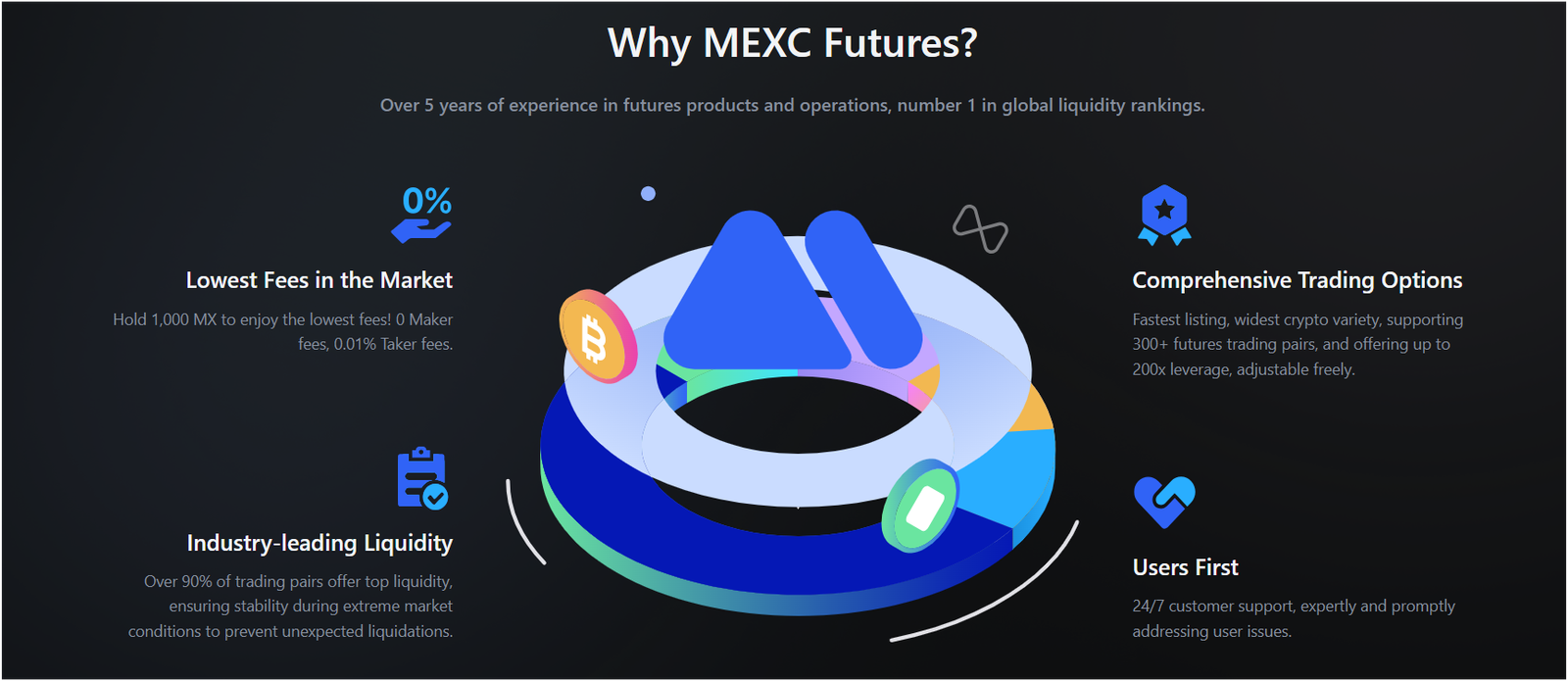
MEXC is one of the most popular crypto exchanges because it charges almost nothing in trading fees, making it extremely cost-effective. It offers no-KYC futures trading which appeals to users who prioritize anonymity and privacy.
MEXC uses a 0% maker fee and a 0.01% taker fee, so it can be a very cost-effective option for buying Bitcoin.
On a $1,000 Bitcoin purchase, a 0.01% taker fee is just $0.10. A platform charging 0.1% takes $1, so you probably will not feel a huge difference on a small buy. Larger purchases make the gap much easier to notice. On a $100,000 purchase, MEXC costs $10, while a 0.1% exchange costs $100. You keep $90 more on one trade, and that fee difference becomes very clear on bigger orders.
Key Features |
|
|---|---|
| Promotions | $1,000 sign-up bonus and 50% trading fee discount using referral code “2YUvQ” |
| Trading Fees (Maker/Taker) | 0% maker and 0.01% taker |
| Exchange Products | Spot, Futures, Grid Trading, Staking, Meme Coin Trading Zone, and Instant Crypto-to-Crypto Convert |
| Supported Cryptocurrencies | Bitcoin, Ethereum, Solana, and 3,000+ more altcoins |
| Payment Methods | Credit/debit cards, bank transfers (SEPA and SWIFT), and P2P trading with local currencies (Only crypto without KYC) |
| Licenses | No |
| Security | 2FA Google Authenticator, Anti-Phishing code, withdrawal address whitelisting, and cold storage |
| KYC/AML | Trade, deposit, and withdraw up to 10 BTC /daily without KYC verification |
2. Bitget: Overall Best Crypto Exchange For Beginners
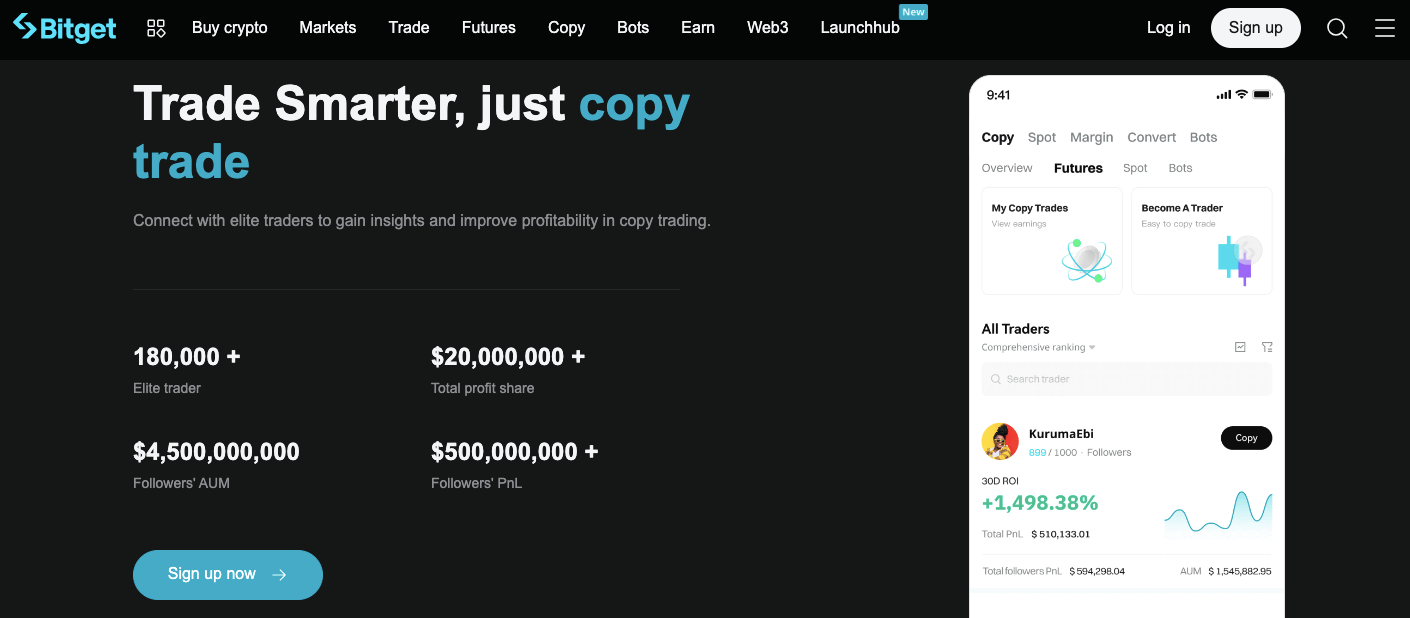
Bitget is a strong crypto exchange for beginners because it combines simple tools, liquidity, and safety features. The platform serves users across 150+ countries, so Bitcoin markets usually stay active and liquid. Active order books can help your buys fill faster with less price slippage.
Well, Bitget also fits you well on mobile, which matters a lot for beginners. The app keeps key actions close, so buying and selling feels less confusing. Fewer taps sounds small, but it helps once prices start moving fast.
Look, safety is another reason Bitget works well for beginners. The exchange highlights a protection fund and regular proof-of-reserves updates, which adds extra confidence. So, Bitget makes the most sense for you when you want one platform that feels easy, safe, and scalable.
Key Features |
|
|---|---|
| Promotions | $1,530 sign-up bonus and 30% trading fee rebate using referral code “tpck” |
| Trading Fees (Maker/Taker) | 0.1% |
| Exchange Products | Spot, Margin, Futures, Copy Trading, P2P trading, Bitget Wallet, NFTs, and more |
| Supported Cryptocurrencies | Bitcoin, Ethereum, Solana, and 1200+ more altcoins |
| Payment Methods | VISA, Mastercard, Apple Pay, Google Pay, and 100+ local methods using P2P |
| Licenses | Virtual Asset Service Provider (Poland), VASP (Lithuania), Blockchain Service Provider in El Salvador |
| Security | 2FA SMS, 2FA Google Authenticator, 256-Bit SSL Encryption, Anti-Phishing code, withdrawal address whitelisting, and insurance fund |
| KYC/AML | Required for cryptocurrency deposits, trades, and withdrawals |
3. Binance: Best Exchange for High Liquidity and Volume
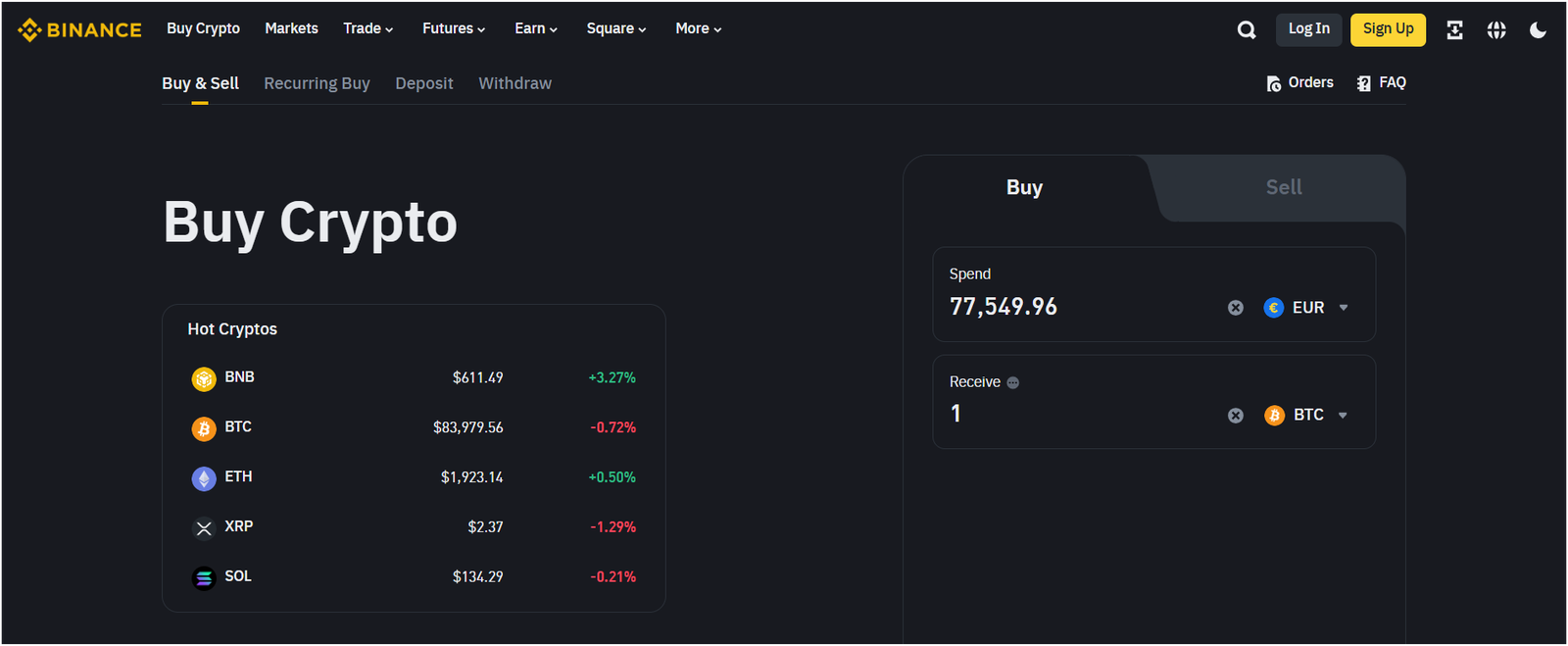
Binance is a strong choice for you when liquidity and trading volume matter most. High volume usually means tighter spreads and faster order fills on Bitcoin. Binance has reached reported 300 million+ registered users
That matters more as your order size grows. A $20 or $100 buy may feel similar anywhere. Bigger buys, like $10,000 or $100,000, can show a clearer difference in execution price.
Binance also stays popular because the market depth is usually strong on major pairs. Strong depth can reduce slippage, which helps you keep more value on entry. The platform supports many coins and advanced tools, but beginners should start with spot buying only. So, Binance makes the most sense for you when you want deep liquidity and smoother fills on Bitcoin trades.
Key Features |
|
|---|---|
| Promotions | $100 sign-up bonus and 20% trading fee discount using referral code “KNQRCYIH” |
| Trading Fees (Maker/Taker) | 0.1% |
| Exchange Products | Spot, Margin, Futures, Options trading, Copy Trading, Trading Bots, P2P trading, NFTs, and more |
| Supported Cryptocurrencies | Bitcoin, Ethereum, Solana, and 400+ more altcoins |
| Payment Methods | VISA, Mastercard, Apple Pay, Google Pay, and 100+ local methods using P2P |
| Licenses | Virtual Asset Service Provider (VASP) licenses from Dubai, France, Italy, Spain, Poland, and Sweden |
| Security | $1B SAFU Fund, 2FA Google Authenticator, SSL Encryption, Anti-Phishing code, withdrawal address whitelisting, and cold storage |
| KYC/AML | Yes (Mandatory) |
(B) Bitcoin ATMs
Bitcoin ATMs can be a safe beginner option when you want a cash purchase in public. Fees are usually higher than exchanges, so convenience is the main reason to use one. Look, operator choice matters more than people think. Bigger networks usually mean better support and fewer surprises.
Most operators do not publish exact daily transaction counts, so public usage is judged by network size and customer numbers. Here are solid picks for Bitcoin ATMs:
| ATMs | Best fit for | Region / Availability | Network Size | Payment Method | Verification |
|---|---|---|---|---|---|
| Bitcoin Depot | Availability | North America / global presence | 9,000+kiosks | Cash | Required |
| CoinFlip | Beginner support | Global | 5,500+ ATMs | Cash | Required |
| Coinme | Trusted retail locations | U.S. retail network | 6,000+ATMs | Cash | Required |
1. Bitcoin Depot: Best Bitcoin ATM Network for Availability
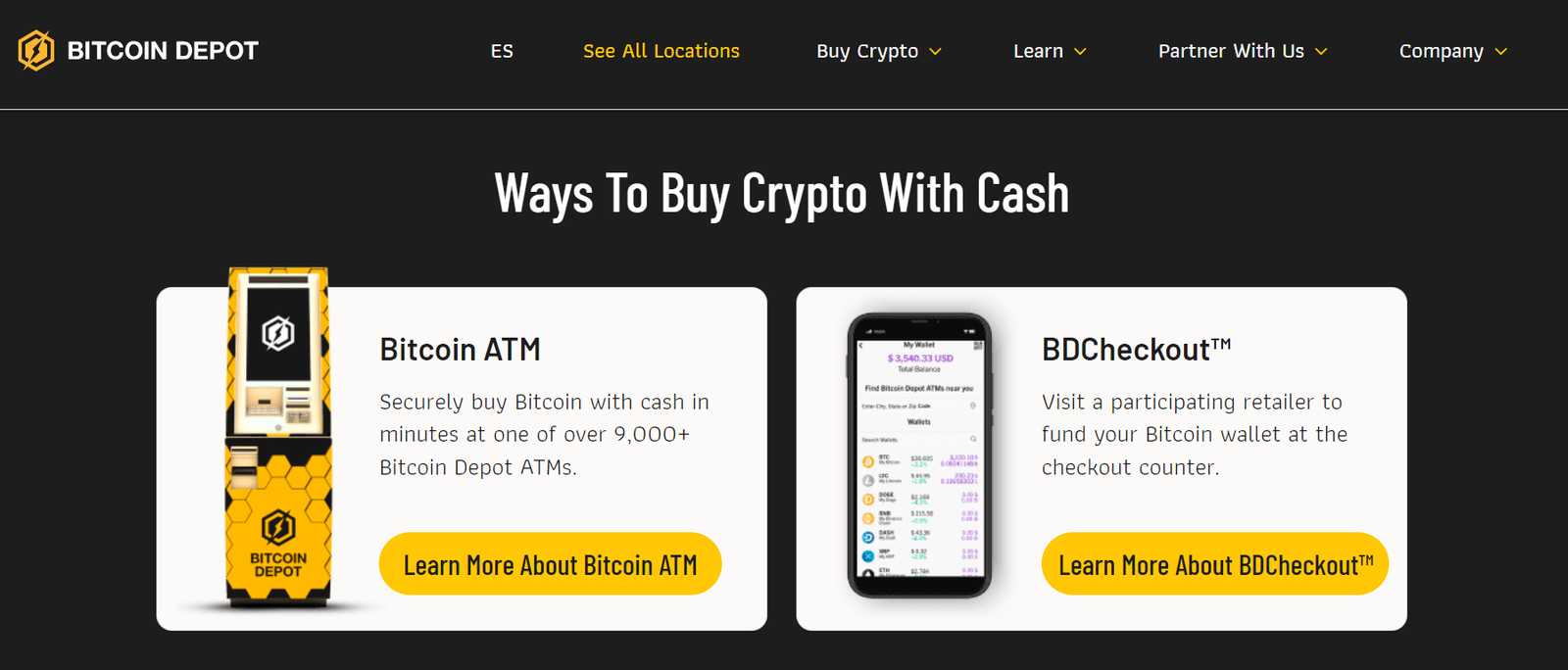
Bitcoin Depot is a strong pick because you get one of the biggest Bitcoin ATM networks available. The company has 9,000+ kiosk locations and the largest North American market share.
Bitcoin Depot also stands out as a public company, which means you can see regular business updates. That public reporting adds a bit more confidence than smaller operators with limited information.
So, Bitcoin Depot fits you best when location availability is your top priority.
2. CoinFlip: Best Bitcoin ATM for Beginner Support
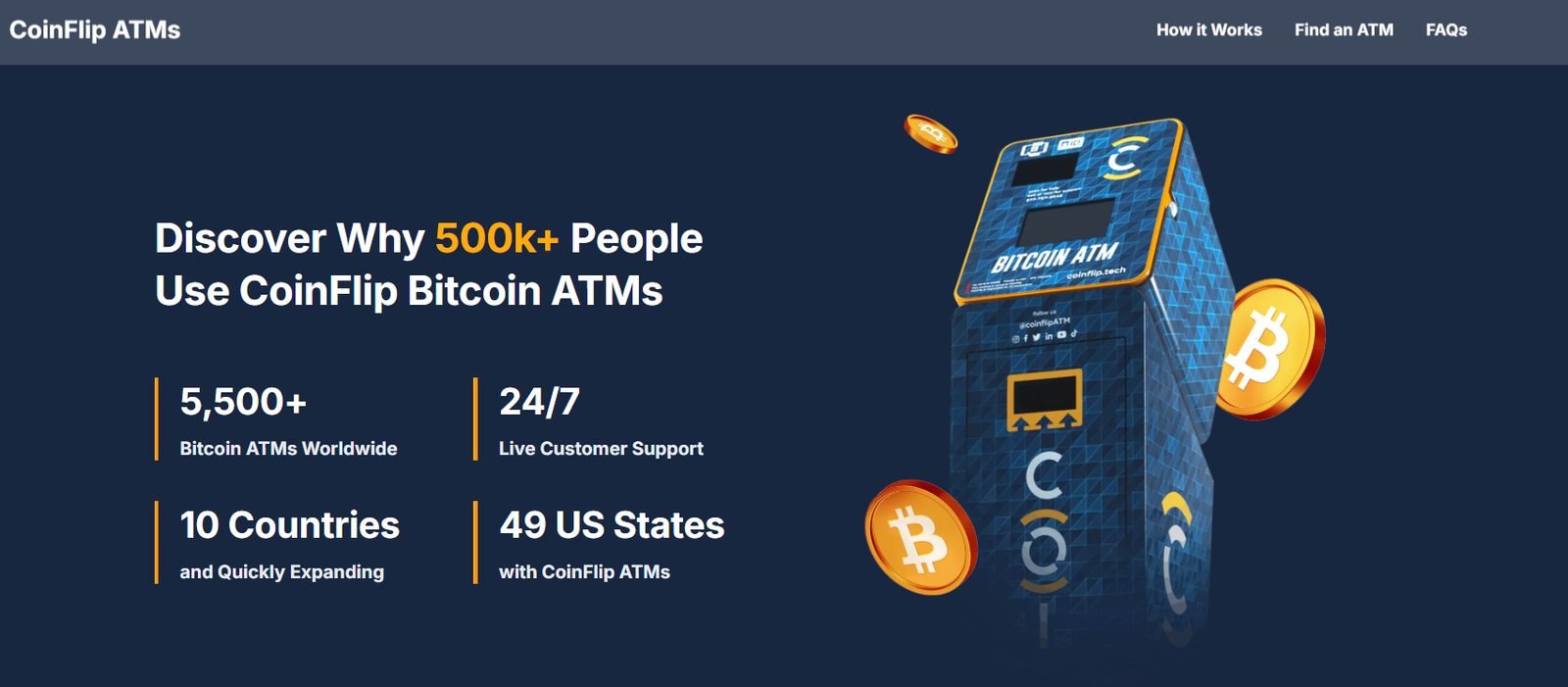
CoinFlip is a great beginner choice because it combines wide coverage with strong customer support. CoinFlip and its network includes 5,500+ ATMs worldwide. It highlights a 24/7 live support, which helps a lot during your first cash purchase. Guess what, support matters more than low fees when a machine asks for steps you do not understand.
CoinFlip also reports about $4 billion in transaction volume, which shows real usage over time. Alright, CoinFlip makes sense for you when first-time guidance matters most.
3. Coinme: Best Bitcoin ATM Option in Trusted Retail Locations
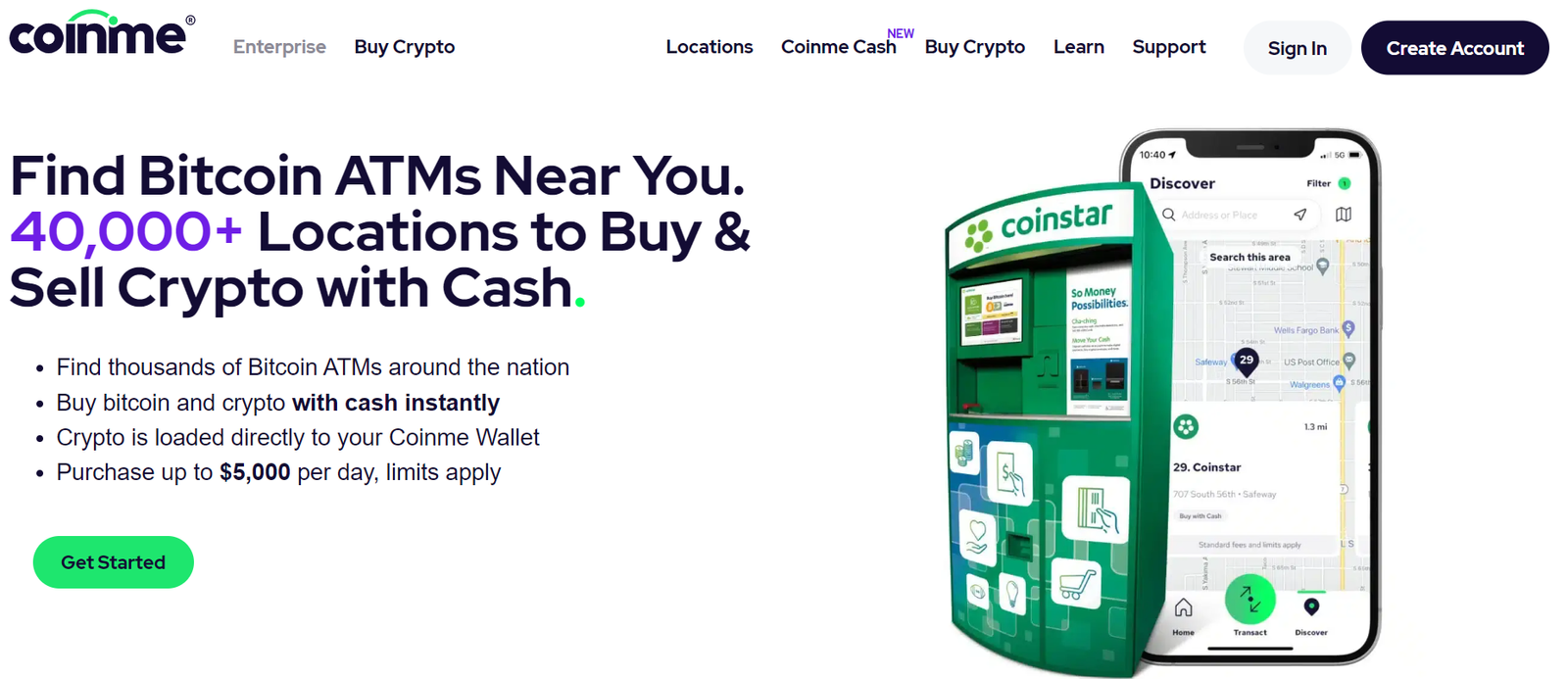
Coinme is a strong option because it works through familiar stores, including Coinstar kiosk locations. Coinme offers 6,000+ Coinstar Bitcoin ATMs, which makes in-person access easier for beginners.
The company also promotes a broader 50,000+ cash-location network for crypto access. Another useful point is cash-out support through 20,000+ ReadyCode ATMs for eligible sell transactions. Look, familiar retail locations can feel safer than random standalone machines during your first buy.
So, Coinme fits you best when convenience and trusted store locations matter most.
(C) P2P Platforms
P2P platforms can be a safe option when you want to buy Bitcoin directly from another person. Fees can be lower than ATMs, but safety depends more on escrow, seller history, and platform rules. Some P2P places are custodial, while others are non-custodial.
- Custodial P2P platforms hold the crypto in escrow until the trade is completed.
- Non-custodial platforms do not hold your funds in the same way. They usually rely on multisig, smart contracts, or wallet-based trade flows instead.
Here are solid picks for Bitcoin P2P platforms:
| Platform | Type | Best fit for | Payment Methods | Fiat Currencies | Fees |
|---|---|---|---|---|---|
| Binance P2P | Custodial | Highest activity | 800+ | 100+ | Platform fee varies by role |
| Bybit P2P | Custodial | Cleaner interface | 80+ | 65+ | 0 fee for takers |
| KuCoin P2P | Custodial | Zero-fee flexibility | 100+ | 30+ | 0 extra P2P fee |
| Bisq P2P | Non-custodial | Privacy | Many local methods | 120+ | Trade fees apply |
| Hodl Hodl P2P | Non-custodial | Bitcoin-only privacy | 100+ | 100+ | Trade fee applies |
| RoboSats P2P | Non-custodial | Maximum privacy | User-agreed methods | 60+ | Trade fee applies |
1. Binance P2P
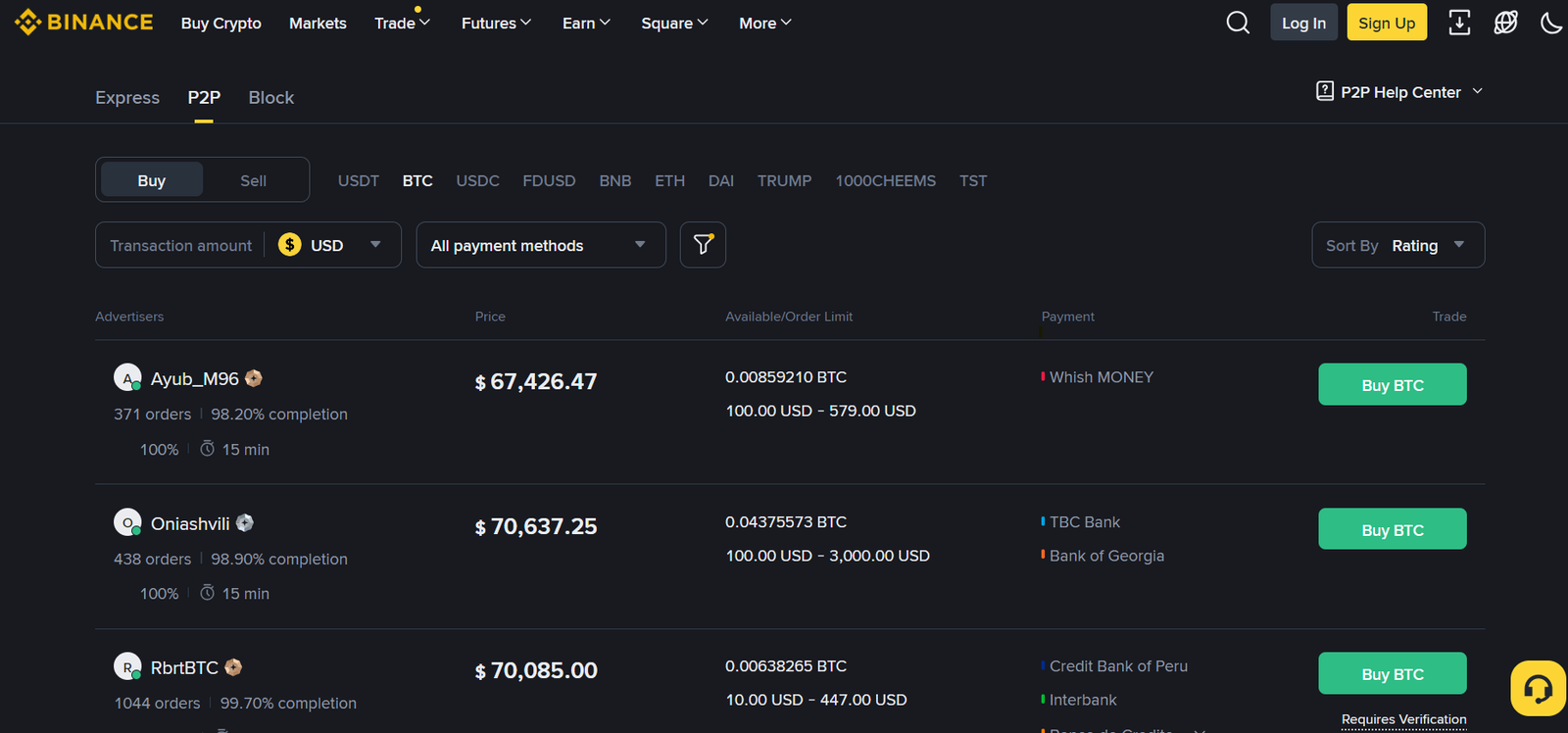
Binance P2P is the strongest custodial pick when you want the busiest marketplace and the most payment choice.
Binance P2P also supports 800+ payment methods and 100+ fiat currencies, so local buying feels easier in many regions. Major payment examples include UPI, Google Pay, IMPS, and bank transfer, while major trade currencies include USD, EUR, INR, and many others through local ads. You can also buy more than just Bitcoin here, because the live P2P market includes BTC, USDT, USDC, BNB, ETH, SOL, and several other coins.
Look, the real advantage is convenience. Binance uses escrow on the custodial side, so the crypto stays locked until both sides complete the trade. So, Binance P2P fits you best when liquidity and payment flexibility matter most.
Check out my Binance Exchange Review 2026 for a deep dive into the latest fees and features.
2. Bybit P2P
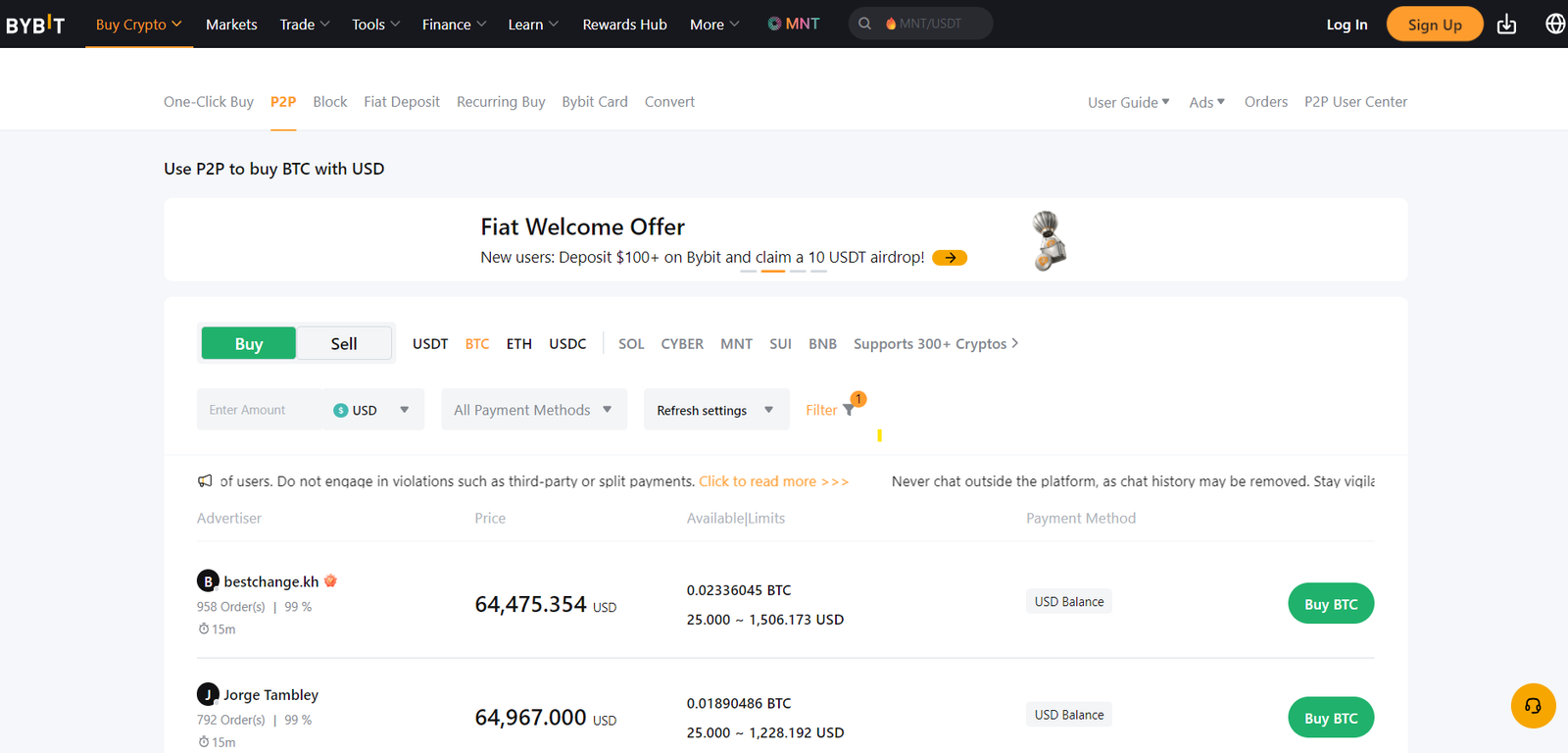
Bybit P2P is a solid custodial option when you want simple trading with broad payment support and a cleaner interface. The platform offers more than 60 payment methods, which helps when local bank tools matter more than card buying. The platform supports 80+ payment methods, including card payments, instant bank transfers, and in-person cash payments. That mix gives you more ways to match with sellers in active markets.
3. KuCoin P2P
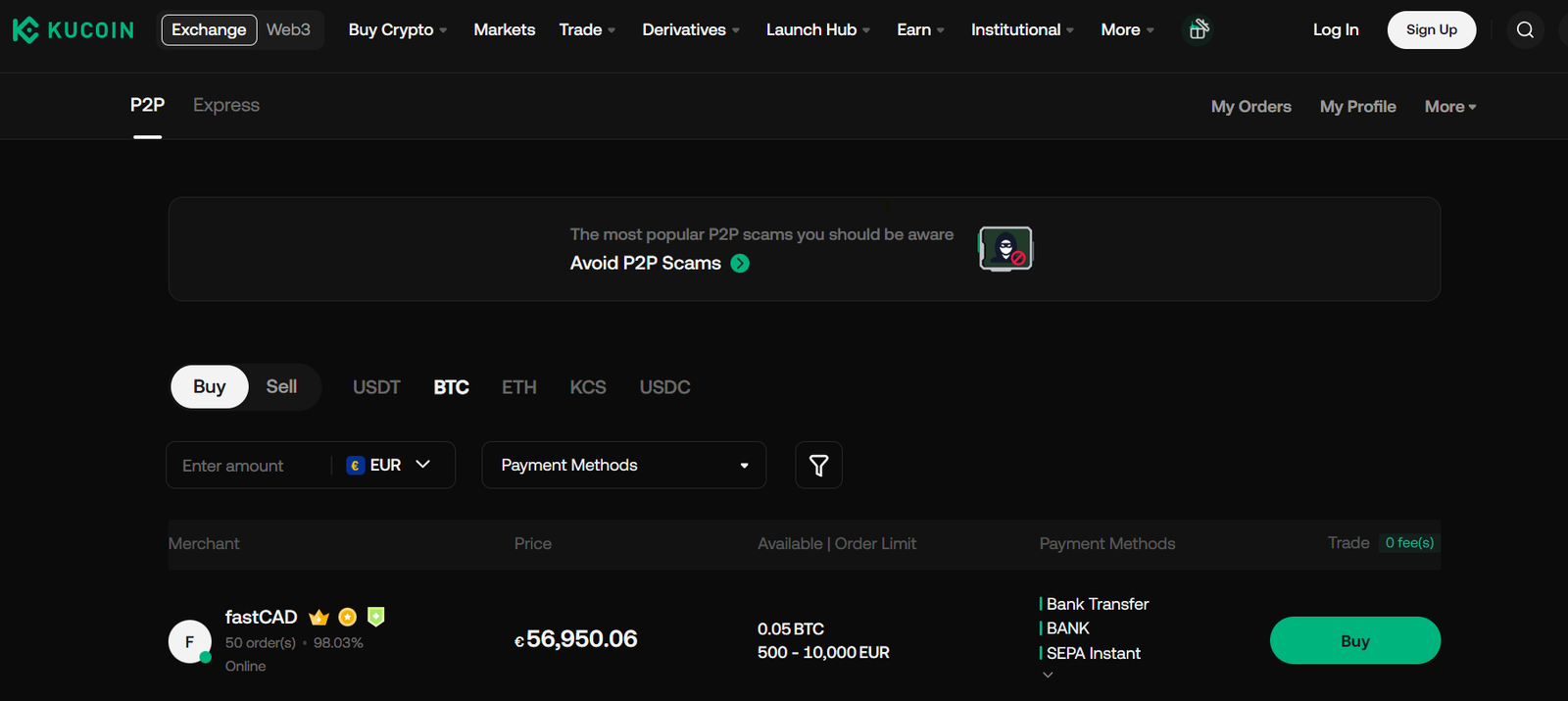
KuCoin P2P is a strong custodial choice when you want broad local payment support without extra platform trading fees. KuCoin P2P market supports 100+ payment methods and 30+ local currencies, which gives you plenty of room to find a matching seller. Major fiat examples include USD, NGN, INR, MYR, and RUB, while major payment methods include bank transfer, Wise, PayPal, Zelle, and Skrill.
The platform also says P2P trades come with zero transaction fees, plus built-in escrow, merchant ratings, and secure settlement tools. So, KuCoin P2P fits you best when you want flexibility, escrow, and no extra P2P trading fee.
Check out my KuCoin Exchange Review 2026 for a detailed overview.
4. Bisq P2P
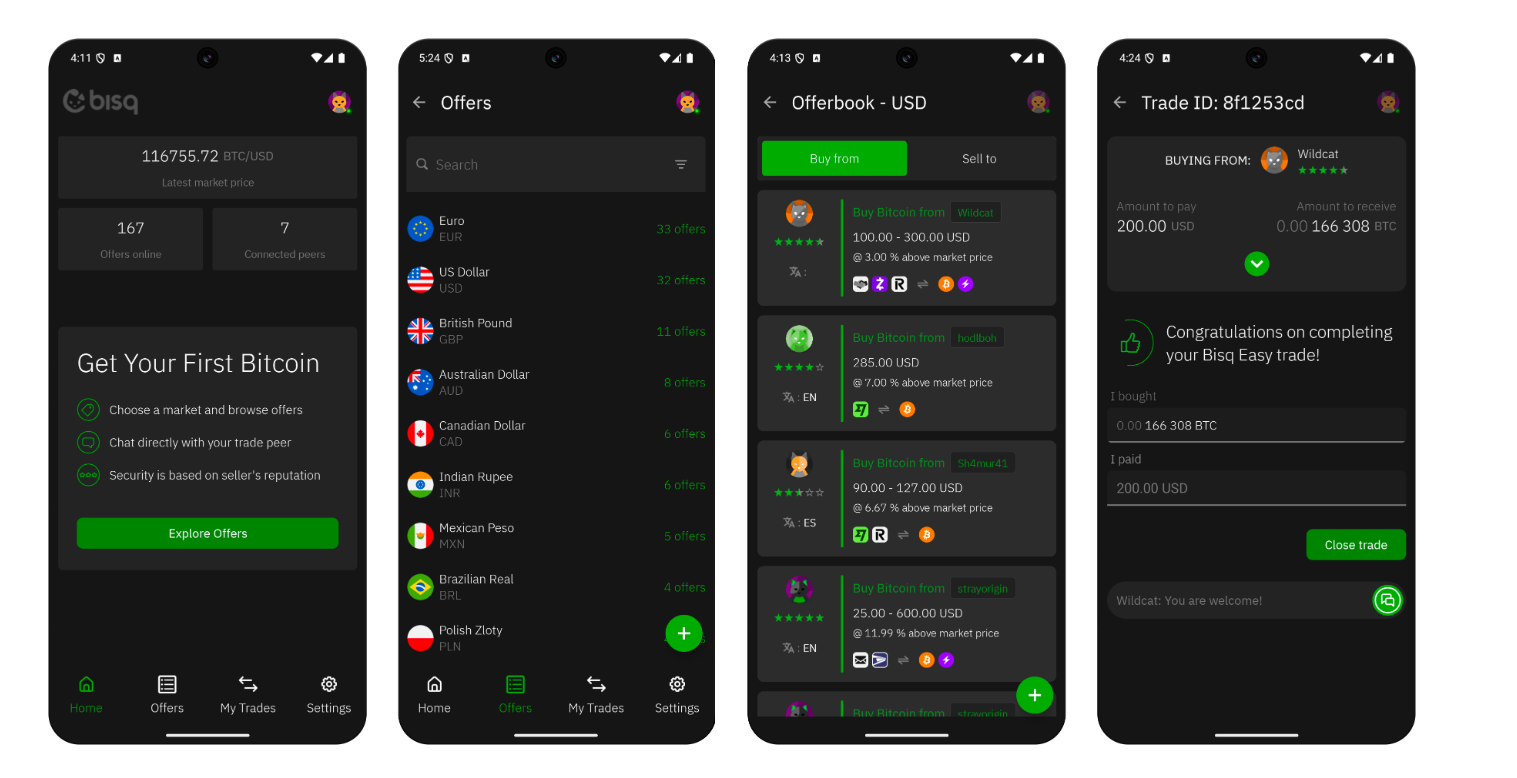
Bisq is the strongest non-custodial P2P option when privacy and control matter more than speed. It runs as an open-source desktop app, and no registration is required before you trade. Instead of using a custodial company wallet, Bisq connects buyers and sellers directly and uses its own trade process with security deposits. Payment choice is one of its biggest strengths.
Official docs list methods like face-to-face cash, Faster Payments, Interac e-Transfer, PromptPay, MoneyGram, Revolut, Wise-style bank transfers, and national bank transfers. That gives you room to match the method that works in your country. Bisq is built mainly for buying and selling Bitcoin for national currencies, and it also supports some altcoin trades on the network.
So, Bisq makes the most sense for you when non-custodial privacy matters more than speed or convenience.
5. Hodl Hodl P2P
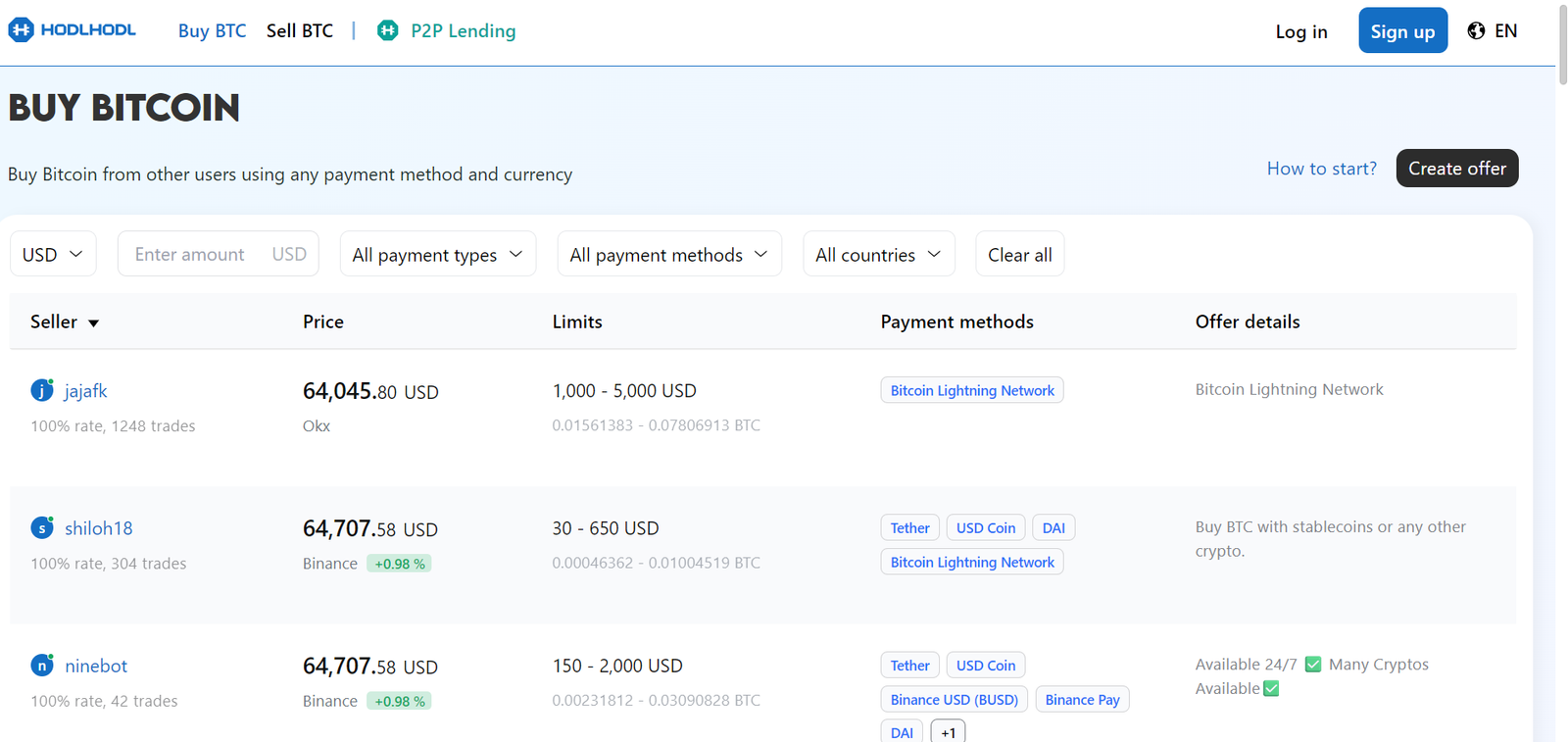
Hodl Hodl is a strong non-custodial P2P option when you want Bitcoin trades without giving the platform control of your funds. The site has been in business for 8 years, supports 100+ currencies, has closed 100,000+ deals, and has 300,000+ registered users. That gives it a more proven feel than many smaller privacy-first platforms.
Payment flexibility is also a major strength here. Hodl Hodl says you can trade using any payment system and any currency, and its platform supports 100+ payment methods.
Another important detail is focus. Hodl Hodl is mainly for Bitcoin only, not a wide coin list. So, Hodl Hodl fits you best when privacy, Bitcoin focus, and non-custodial escrow matter most.
6. RoboSats P2P
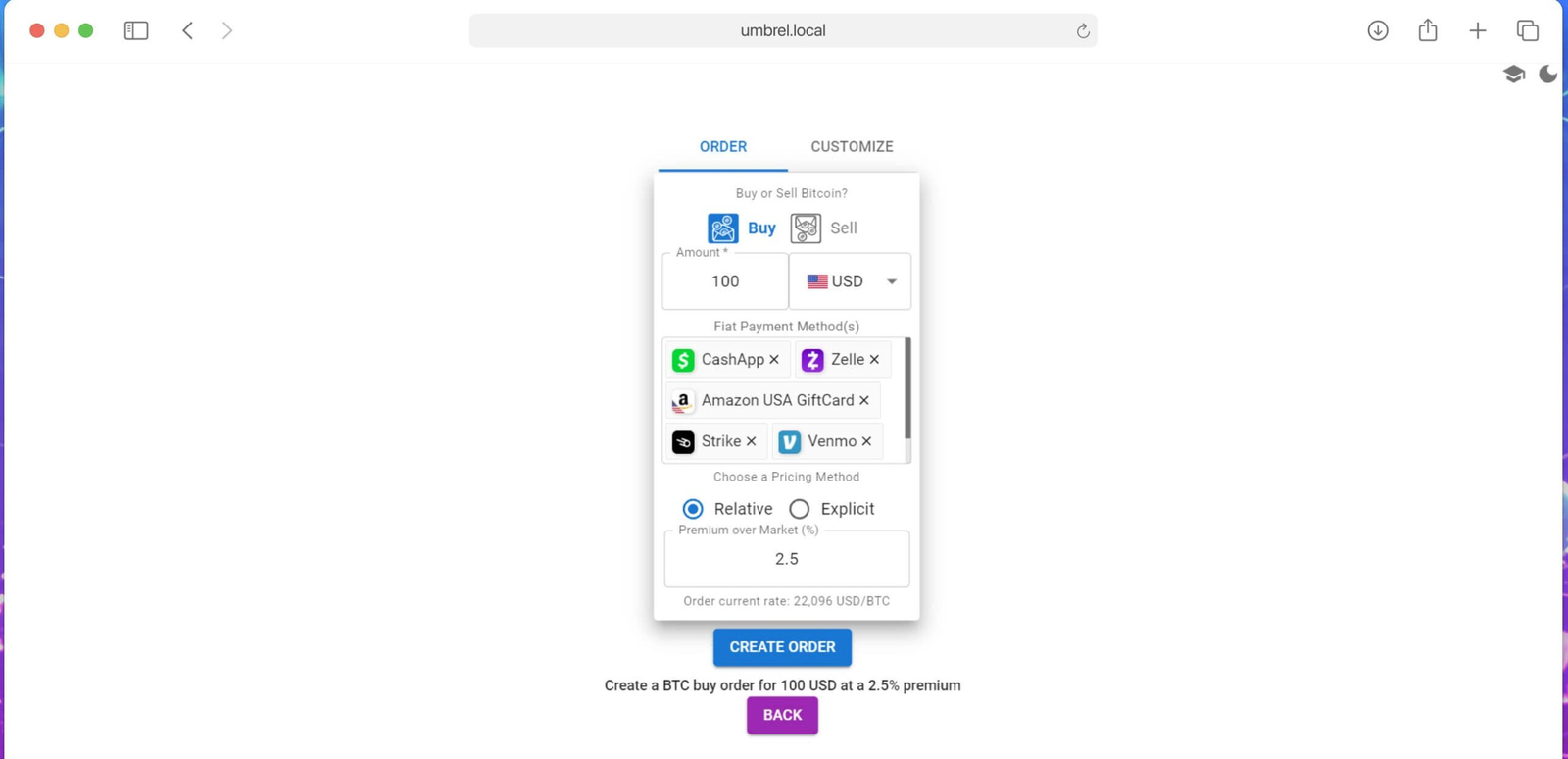
RoboSats is the most private non-custodial-style P2P option on this list because it is built around Bitcoin over Lightning, not a normal exchange account. The platform uses robot identities, Tor access, and Lightning hold invoices to reduce custody and trust needs during a trade. Payment flexibility is wide.
There are no restrictions on fiat payment methods, as long as both sides agree. The list includes Instant SEPA, Interac e-Transfer, Wise, Amazon eGift Cards, Revolut, PayPal, Venmo, and Cash App. Orders stay public for 24 hours by default, and the fiat leg should be completed quickly because the trade timer matters. You can filter the order book by currency, and the docs show examples with currencies like EUR and GBP, while new fiat currencies can be added when needed.
Look, RoboSats is less beginner-friendly. So, RoboSats fits you best when privacy matters more than convenience.
(D) Payment Apps
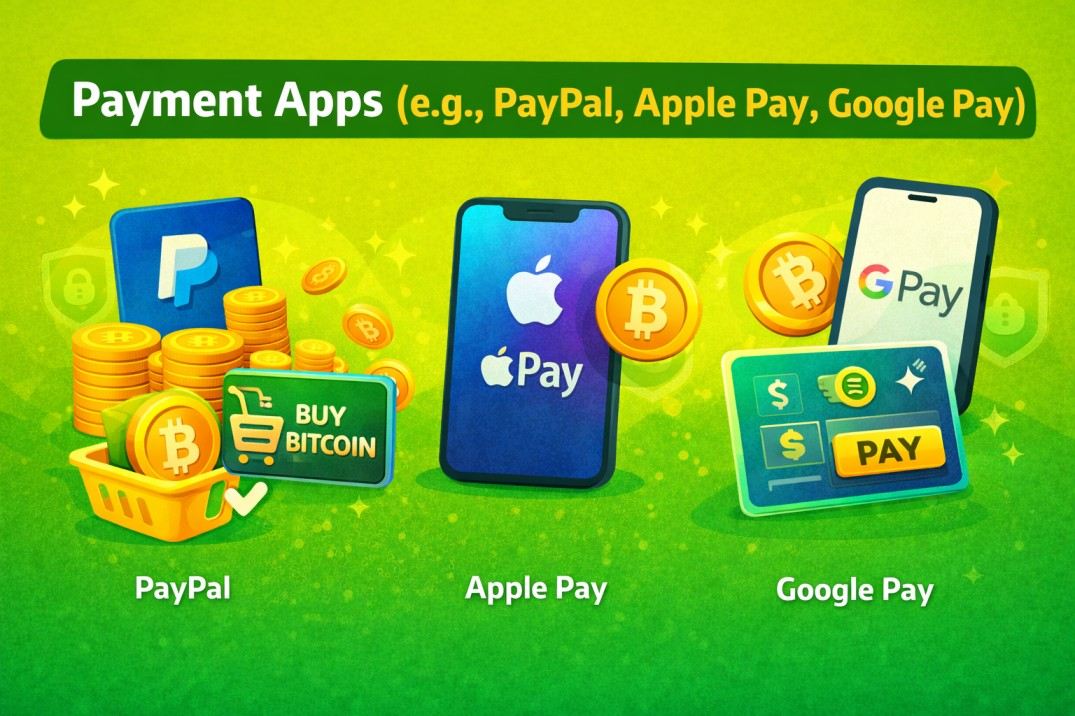
Payment apps can be a simple way to buy Bitcoin when speed and convenience matter most. They feel familiar, so your first purchase can seem less intimidating than using a full trading screen.
PayPal is the most direct example here because it offers built-in crypto buying in supported markets. With PayPal you can start with as little as $1, choose a one-time or recurring buy, and pay with your balance, bank account, or debit card. That makes it easy for beginners who want a very simple first step.
Apple Pay and Google Pay usually work a bit differently. They are often used as payment methods inside crypto services like MoonPay, Ramp, or similar wallet-buy widgets, not as full Bitcoin platforms by themselves. That setup is convenient because checkout feels fast, especially on mobile, but the total cost can still be higher than a normal exchange buy.
So, payment apps fit you best when ease of use matters more than getting the absolute lowest cost
How to Buy, Sell, and Invest in Bitcoin: Step-by-Step Guide for Beginners
You can buy Bitcoin through cryptocurrency exchanges, wallet apps, Bitcoin ATMs, or peer-to-peer platforms, using methods like bank transfers, credit/debit cards, or payment apps.
Step 1: Choose a Bitcoin Buying Method
You can buy Bitcoin through a crypto exchange, wallet app, Bitcoin ATM, or P2P platform. Each method works, but some options are much easier for beginners than others. Safety, fees, speed, and convenience should guide your choice from the start.
Well, crypto exchanges are usually the best option for you as a beginner. They make buying simple, keep pricing clear, and support common payment methods like bank transfers and cards.
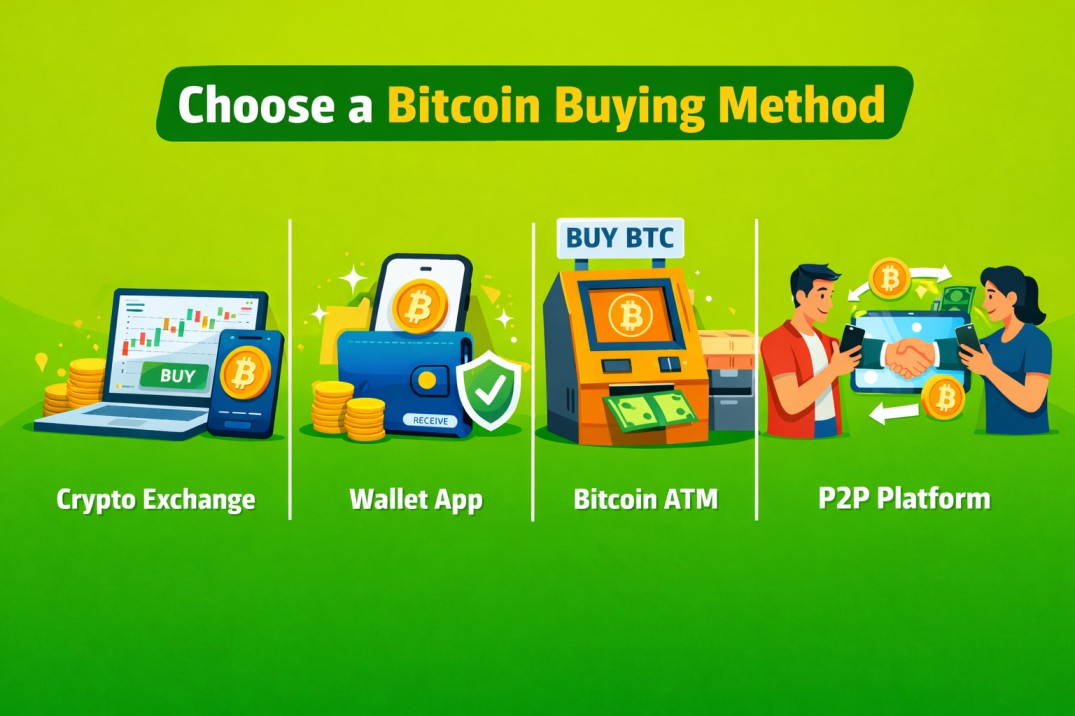
A wallet app can also work, but coin choices and tools may feel more limited. Bitcoin ATMs are easy to understand, yet fees are often much higher. P2P platforms give you flexibility, though checking seller trust takes more effort.
Most beginners want the easiest path with the fewest mistakes. A trusted exchange gives you that balance better than the other methods. You can create an account, fund it, and buy a small amount in one place.
Step 2: Set Up an Account
Setting up your account is the next step after choosing your Bitcoin buying method. MEXC is a simple example because sign-up is quick and beginner-friendly. You can register with your email or phone number, create a password, and verify your account in a few minutes.
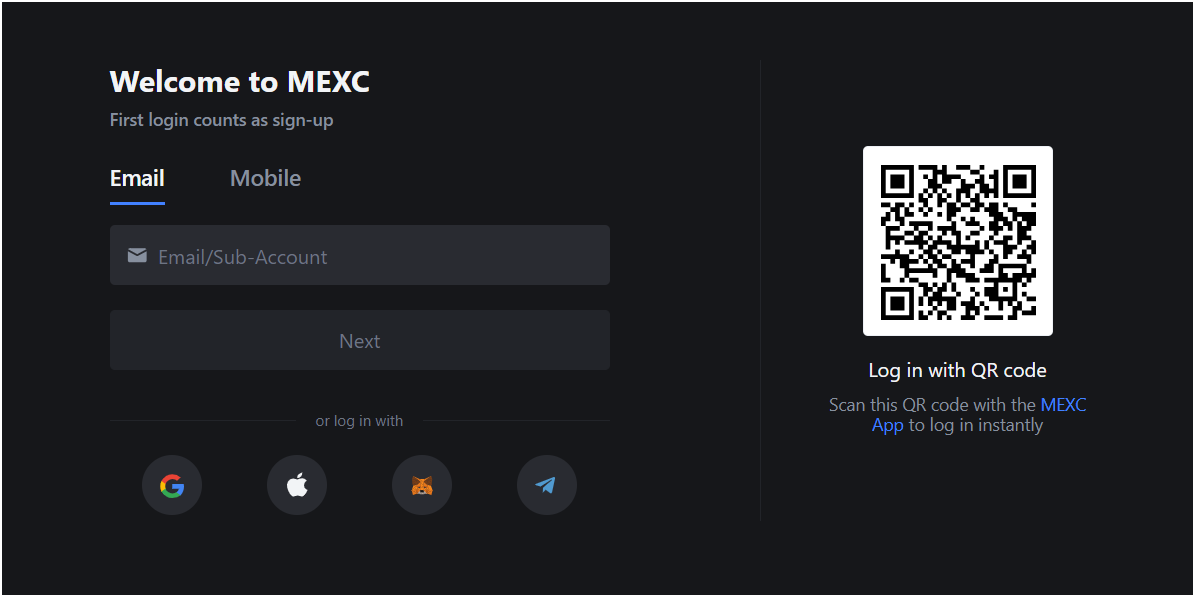
So, your goal here is simple: create the account, secure it, and get ready for your first Bitcoin buy.
You can use our MEXC referral code: “2YUvQ” to get a free crypto referral bonus worth 1,000 USDT and a 50% trading fee rebate in 2026.
Step 3: Buy Bitcoin
On MEXC, search for BTC/USDT in the Spot market, not futures. Spot buying means you buy real Bitcoin. A market order buys instantly at the best available price, but it usually makes you a taker, so you pay the taker fee. A limit order lets you choose your price. The order waits on the book, which usually makes you a maker. Market orders are better for speed, while limit orders are better for price control.
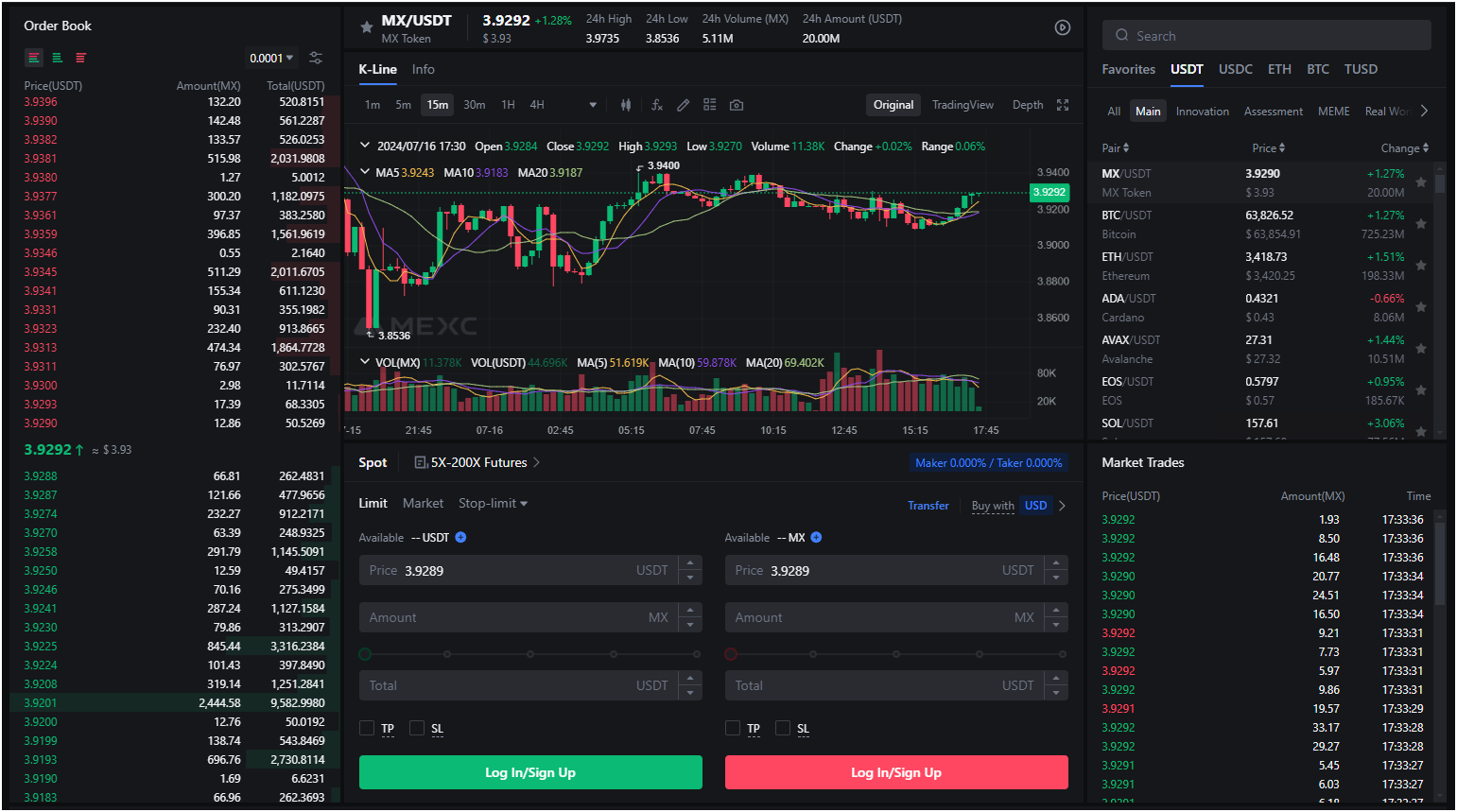
Beginners can start with a small buy, and check the total cost before confirming the order.
Step 4: Secure Your Bitcoin
Securing your Bitcoin matters right after you buy it, because a purchase is only safe when your coins stay protected.
Some beginners leave Bitcoin on the exchange for convenience, but long-term storage is safer in a personal wallet. A hot wallet works online and is easier for quick access. A cold wallet stays offline and gives stronger protection for larger amounts.
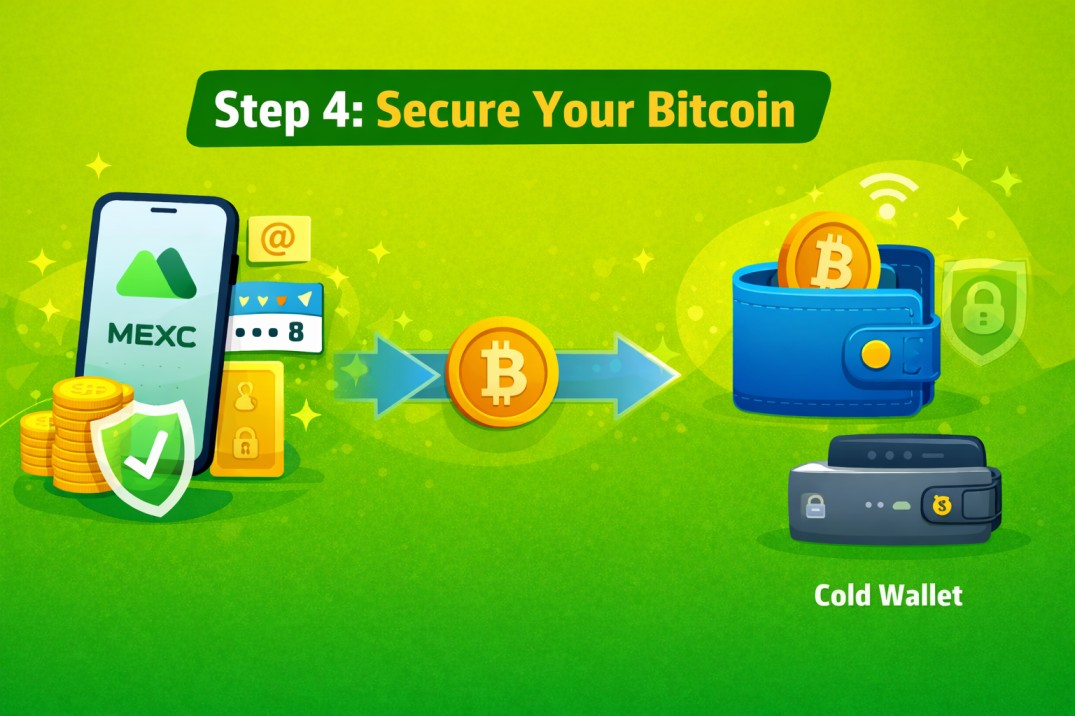
Look, exchange accounts should always use two-factor authentication, a strong password, and withdrawal checks. Wallet addresses should also be double-checked before sending Bitcoin, because crypto transfers cannot be reversed.
Step 5: Consider Investment Strategy
Your next step is thinking about how you want to hold Bitcoin after buying it. Some people buy once and hold for the long term. Others buy in smaller amounts over time to avoid putting all their money in at one price.
Bitcoin prices can move fast, so planning matters more than rushing. A simple approach often feels easier for beginners because it keeps decisions clear and easier to manage. Look, this step is not about chasing quick profits. It is about understanding your comfort level, budget, and time frame before making another purchase.
So, your goal here is simple: choose a buying approach that feels manageable and fits your personal plan.
Conclusion: How to Purchase Bitcoin
Buying Bitcoin safely starts with choosing the method that feels simple, clear, and manageable for you. Most beginners do best with a trusted crypto exchange because pricing is better, the process is easier, and security tools are built in.
Bitcoin ATMs, P2P platforms, and payment apps can work too, but each one comes with trade-offs. ATMs are convenient but often expensive. P2P platforms give you more flexibility, though seller checks and escrow matter a lot. Payment apps feel familiar, yet fees can be higher than a normal exchange buy.
Well, buying Bitcoin is not only about getting the coin. It is also about using the right platform, understanding how orders work, and storing your Bitcoin safely after purchase. So, your best next move is choosing a method that matches your comfort level and keeps the process easy to control.
FAQs: Bitcoin Buying Guide
How to Buy Bitcoin With Credit or Debit Card?
You can buy Bitcoin with a credit or debit card through a crypto exchange, wallet app, or payment service that supports card purchases. Exchanges like MEXC, Bitget, or Binance usually make the process simple because you add your card, enter the amount, and confirm the order. Card buying feels fast, but fees are often higher than bank transfers. Look, checking the final price before you confirm matters more than the speed.
How to Buy Bitcoin With Cash Anonymously?
You can buy Bitcoin with cash through a Bitcoin ATM or a P2P platform that supports in-person cash deals. Bitcoin ATMs are easier for beginners, but fees are usually high and some machines still ask for verification. P2P cash trades can give you more privacy, though escrow and seller trust matter a lot. Well, “anonymous” never means risk-free, so starting small and staying in public places is the smarter move.
What is the Best Way to Invest in Bitcoin Safely?
The safest way to invest in Bitcoin usually means starting small, using a trusted platform, and avoiding rushed decisions. Some people buy once and hold. Others buy in smaller amounts over time to reduce timing risk. A simple plan, strong account security, and safe storage matter more than trying to buy at the perfect moment.
What are the Cheapest Ways to Buy Bitcoin?
The cheapest way to buy Bitcoin is usually through a low-fee crypto exchange using spot trading. Platforms like MEXC can keep costs low because trading fees are very small. Bank transfers are also usually cheaper than card payments or Bitcoin ATMs. So, low-fee exchanges make the most sense when cost matters most.